Currency Fluctuation Monitoring Platforms
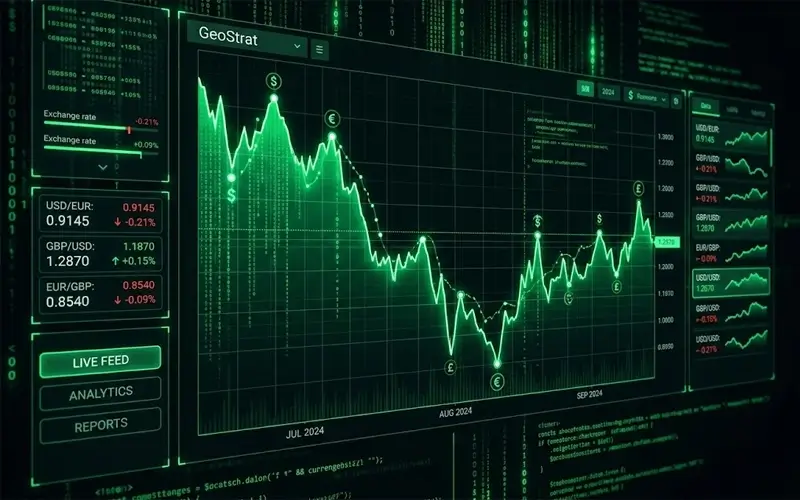
best Currency Fluctuation Monitoring Platforms
The best platform depends on whether you need real-time market data, technical analysis, historical exchange rates, or geopolitical risk monitoring. The following platforms offer different capabilities for tracking currency movements and understanding the factors behind them.
Platform | Primary Focus | Key Capabilities |
|---|---|---|
GeoStrat | Market and geopolitical intelligence | Forex monitoring, economic indicators, risk alerts |
TradingView | Market charting and analysis | Currency charts, technical indicators, economic calendar |
Bloomberg FX Center | Financial news and market insights | FX news, currency analysis, economic developments |
Xe Currency Data | Exchange rate data | Historical rates, currency data, API access |
OANDA Exchange Rates API | Currency data integration | Exchange rate feeds, historical data, API access |
1. GeoStrat
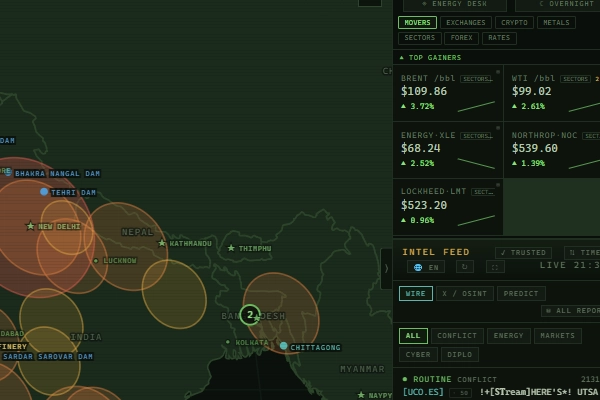
GeoStrat combines market monitoring with geopolitical, economic, and security intelligence to help users understand the broader factors that may influence currency fluctuations. In addition to Forex monitoring and historical market data, the platform provides tools for tracking political risks, sanctions, conflicts, economic indicators, and global news. This combination is useful for analysts and businesses that want to evaluate currency movements in the context of international developments rather than relying on price data alone.
Key capabilities include:
Forex Monitoring: Track foreign exchange markets alongside other financial markets.
Economic Indicators: Review economic data and trade-related developments that may affect currency values.
Geopolitical Risk Analysis: Monitor conflicts, political instability, sanctions, and international tensions.
Global Intelligence Map: Explore geolocated events and monitor developments across countries and regions.
News and Alerts: Follow relevant market and geopolitical news and configure alerts for selected events.
AI-Powered Analysis: Use AI intelligence tools and automated briefings to investigate developments and summarize relevant information.
These capabilities support contextual analysis of currency risks. They do not guarantee accurate predictions of future exchange rates.
2. TradingView
TradingView is a market analysis platform that helps traders monitor currency pairs, examine price movements, and identify potential market trends. Its charting tools support technical analysis, while the economic calendar provides information about scheduled releases, central bank announcements, and other events that may influence exchange rates. Users can also configure alerts to follow selected market conditions without continuously watching charts.
Key features include:
Forex charts and technical indicators.
Customizable price alerts and watchlists.
Economic calendar with event filters.
Historical price charts for trend analysis.
3. Bloomberg FX Center
Bloomberg FX Center combines currency market information with financial journalism and economic analysis. It provides an overview of currency movements and coverage of developments that can influence foreign exchange markets, including monetary policy, inflation, international trade, and political uncertainty. It is particularly useful for analysts and businesses that need to understand the news and economic context behind currency movements.
Key features include:
Currency market updates and cross rates.
Financial news related to foreign exchange.
Coverage of central bank decisions and economic developments.
Analysis of international events affecting currency markets.
4. Xe Currency Data

Xe Currency Data provides exchange rate information for businesses, developers, and organizations that need currency data for financial applications. Its data services support access to exchange rates and currency information that can be integrated into websites, financial systems, and reporting tools. Historical exchange rate data can also help users compare rates across different periods and assess how currency values have changed over time.
Key features include:
Exchange rate data for multiple currencies.
Historical currency data for comparisons.
API access for software integration.
Currency data for business applications and financial reporting.
5. OANDA Exchange Rates API
OANDA Exchange Rates API is designed for businesses and developers that need foreign exchange data within their own applications and analytical systems. Through API-based access, organizations can incorporate exchange rate information into financial reports, transaction systems, and internal dashboards. Historical data can support comparisons across periods, helping users evaluate exchange rate changes and identify patterns relevant to financial planning.
Key features include:
Programmatic access to exchange rate data.
Integration with financial applications and dashboards.
Historical rate analysis, depending on the service and subscription.
Support for currency conversion and business reporting workflows.
Key Features to Look for in a Currency Monitoring Platform
A useful currency monitoring platform should provide reliable exchange rate information and tools for interpreting market movements. The right combination of features depends on whether the goal is trading, business risk management, economic research, or geopolitical analysis.
Real-Time Exchange Rate Data
Timely exchange rate information helps users monitor changes in currency pairs and respond to market developments. Before choosing a platform, check its data update frequency, supported currencies, market coverage, and whether prices are real-time, delayed, indicative, or based on reference rates. These distinctions are important because not every platform provides executable trading prices.
Historical Data and Volatility Analysis
Historical exchange rate data allows users to compare current movements with previous market conditions. Charts, percentage changes, and volatility measurements can help identify periods of unusual price movement and assess how a currency has behaved over different time frames. This information supports analysis but does not establish that past patterns will repeat.
Economic News and Geopolitical Risk Monitoring
Currency values can respond to inflation reports, interest rate decisions, trade restrictions, elections, conflicts, and international sanctions. A platform that combines market data with economic news and geopolitical monitoring can help users investigate possible reasons behind exchange rate changes. For businesses operating internationally, this context can be particularly valuable when assessing exposure to country and trade risks.
Custom Alerts and Automated Reports
Custom alerts help users identify important developments without monitoring every market continuously. Depending on the platform, alerts can be based on price thresholds, selected news keywords, economic announcements, or geopolitical events. Automated reports can also help teams maintain a consistent overview of currency movements and relevant risks.
API Access and Data Integration
API access is useful when organizations need to integrate exchange rate information into financial software, internal dashboards, or automated reporting systems. When evaluating an API, review its data coverage, update frequency, historical depth, rate limits, pricing, and licensing terms. These details determine whether the service fits the organization’s technical and operational requirements.
How Geopolitical Events Affect Currency Fluctuations
Geopolitical events can influence currency markets by changing investor confidence, trade flows, energy prices, and expectations about economic growth. Wars, diplomatic disputes, sanctions, and political instability may increase uncertainty and lead investors to adjust their exposure to different currencies. In some circumstances, demand for currencies perceived as safe havens increases; in others, a currency may strengthen or weaken depending on its country’s economic position, trade relationships, and policy response. The direction and scale of the movement depend on the event and the market conditions surrounding it.
Disruptions to shipping routes, energy infrastructure, and international supply chains can also affect currencies by increasing import costs, reducing export revenues, or changing inflation expectations. Central bank decisions and government responses may amplify or offset these effects. For this reason, monitoring exchange rates alongside geopolitical developments, economic indicators, sanctions, commodity markets, and international news can provide a broader understanding of currency risks. Platforms such as GeoStrat bring several of these intelligence categories together, helping users examine market movements within their wider global context.
How to Choose the Right Currency Fluctuation Monitoring Platform
Choosing a currency monitoring platform starts with identifying the type of information you need and how you plan to use it. A trader may prioritize charting and price alerts, while an international business may need historical exchange rates and API integration. Organizations assessing country exposure may also need geopolitical intelligence, economic indicators, and news monitoring. Before selecting a platform, consider the following factors:
Data accuracy and timeliness: Check the data sources, update frequency, and any reporting delays.
Market coverage: Confirm that the platform supports your target currencies and relevant markets.
Analytical tools: Look for historical comparisons, volatility analysis, charts, and economic indicators.
Risk monitoring: Determine whether you need to track sanctions, political instability, conflicts, or supply chain disruptions.
Alerts and reporting: Evaluate notification options and automated reporting capabilities.
Integration and cost: Compare API availability, subscription requirements, data limits, and compatibility with existing systems.
The best choice is the platform that matches your monitoring goals rather than simply offering the largest number of features.
Conclusion
Currency fluctuation monitoring platforms help traders, analysts, and businesses track exchange rate movements and understand the factors influencing currency values. TradingView is useful for charting and technical analysis, Bloomberg FX Center combines currency information with financial news, and Xe and OANDA offer exchange rate data services for different business and technical needs. For users who also need to examine geopolitical risks, international events, economic indicators, and market developments, GeoStrat provides a broader intelligence environment that connects these areas of analysis. By combining currency monitoring with relevant economic and geopolitical information, users can make better-informed assessments of potential risks without treating any platform as a guarantee of future exchange rate movements.
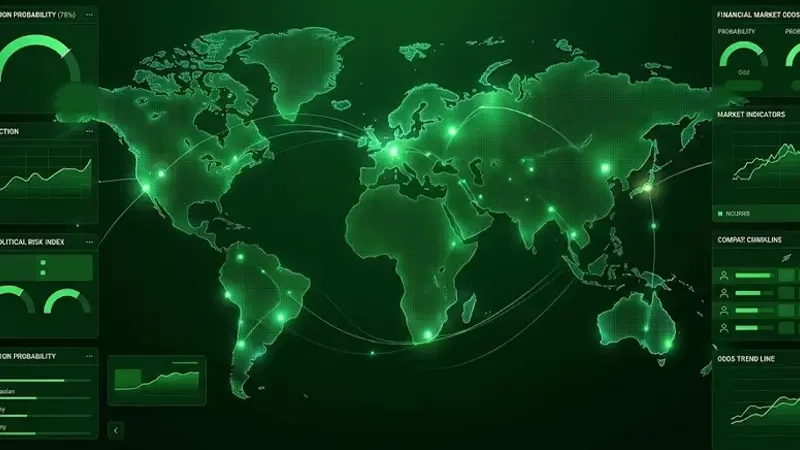
best tools for monitoring political news and market odds
Political developments, geopolitical tensions, and economic decisions can influence global markets and create new risks for businesses, investors, and analysts. Keeping track…
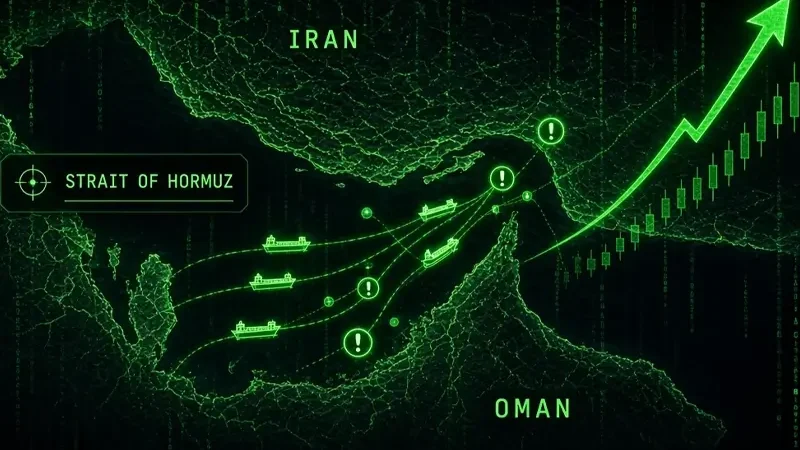
Geopolitical Intelligence Platform for Oil Price Analysis
Crude oil prices are influenced by more than supply and demand. Geopolitical conflicts, international sanctions, disruptions to shipping routes, and threats to…
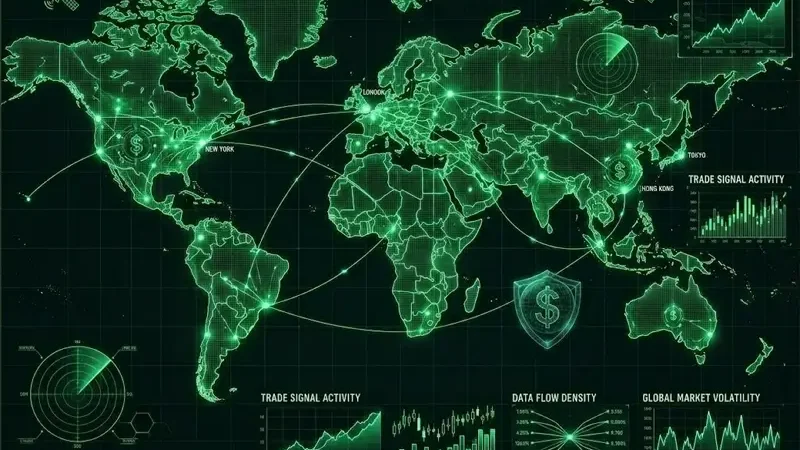
best tools for tracking geopolitical events and market impact?
Geopolitical events can reshape global markets, disrupt supply chains, and influence the prices of energy, commodities, and financial assets. For businesses, investors,…
FILE A TRANSMISSION