Understanding Currency Risk in Politically Unstable Environments
Currency risk refers to the possibility of financial losses caused by changes in exchange rates. In politically unstable environments, this risk can increase significantly because uncertainty around government policies, economic conditions, or international relations can directly affect the value of a country’s currency. Businesses and investors with exposure to foreign currencies may face unexpected changes in asset values, costs, or revenues.
Key effects of currency risk in unstable political conditions include:
Exchange rate volatility: Sudden political events can cause rapid movements in currency values.
Reduced investment confidence: Uncertainty may lead investors to move capital away from higher-risk markets.
Higher transaction costs: Businesses involved in international trade may face increased costs due to unpredictable currency movements.
Challenges in financial planning: Companies may find it more difficult to forecast future revenues, expenses, and investment returns.
How Political Instability Impacts Currency Markets
Political instability can have a direct impact on currency markets by changing how investors perceive the economic outlook of a country. Events such as government changes, geopolitical conflicts, sanctions, or sudden policy shifts can reduce market confidence and increase demand for more stable currencies. As investors seek to protect their capital, capital outflows may increase, putting additional pressure on the local currency.
These conditions often lead to higher currency volatility and make exchange rates more difficult to predict. Businesses operating across borders may face challenges in managing costs, pricing products, and maintaining stable cash flows. For this reason, monitoring political developments and understanding their potential impact on financial markets are important parts of effective currency risk management.
Key Strategies to Hedge Currency Risk During Political Crises
Managing currency risk during periods of political uncertainty requires a combination of financial tools and strategic planning. While no method can eliminate all risks, effective hedging strategies can help reduce the impact of sudden exchange rate movements and provide greater financial stability.
Common approaches for reducing currency exposure include:
Using financial instruments to protect against unfavorable exchange rate changes
Diversifying currency exposure to reduce dependence on a single market
Adjusting international contracts and financial operations based on risk conditions
Monitoring political and economic developments that may influence currency movements
Using FX Forward Contracts
FX Forward contracts allow businesses and investors to set an exchange rate for a future transaction, helping them reduce uncertainty caused by currency fluctuations. This method is commonly used when future payments or revenues in a foreign currency are known in advance, as it provides greater predictability during periods of market volatility.
By locking in a predetermined exchange rate, organizations can protect their financial plans from sudden currency depreciation or appreciation caused by political events. However, forward contracts also reduce the ability to benefit from favorable future exchange rate movements.
Currency Swaps and Cross-Border Financial Instruments
Currency swaps are financial agreements that allow two parties to exchange cash flows in different currencies. These instruments are often used by companies and financial institutions with international operations to manage long-term currency exposure and reduce the impact of exchange rate changes.
Cross-border financial instruments can provide additional flexibility when businesses operate across multiple markets. By aligning currency obligations with expected revenues or financing needs, organizations can better manage risks associated with political and economic uncertainty.
Currency Diversification
Currency diversification involves spreading financial exposure across multiple currencies instead of relying on a single currency. This approach can help reduce the impact of a sharp decline in one currency caused by political instability or economic disruptions.
For international businesses and investors, maintaining exposure to different currencies can create a more balanced risk profile. However, diversification requires continuous monitoring because global currencies are influenced by various economic, political, and market factors.
Holding Safe-Haven Assets
During periods of political uncertainty, investors often look for assets and currencies that are considered more resilient to market shocks. Holding safe-haven assets can help reduce exposure to severe currency fluctuations and provide additional protection during times of instability.
Common examples include major reserve currencies and other assets that historically attract demand during periods of global uncertainty. However, the performance of safe-haven assets can also change depending on broader economic conditions and market expectations.
Using Real-Time Geopolitical Intelligence Platforms to Monitor Currency Risks
Effective currency risk management is not limited to reacting after market movements occur. Monitoring geopolitical developments in real time can help businesses, investors, and analysts identify potential risks before they create major financial impacts. Political conflicts, policy changes, sanctions, and regional instability can all influence currency markets, making continuous awareness of global events an important part of risk assessment.
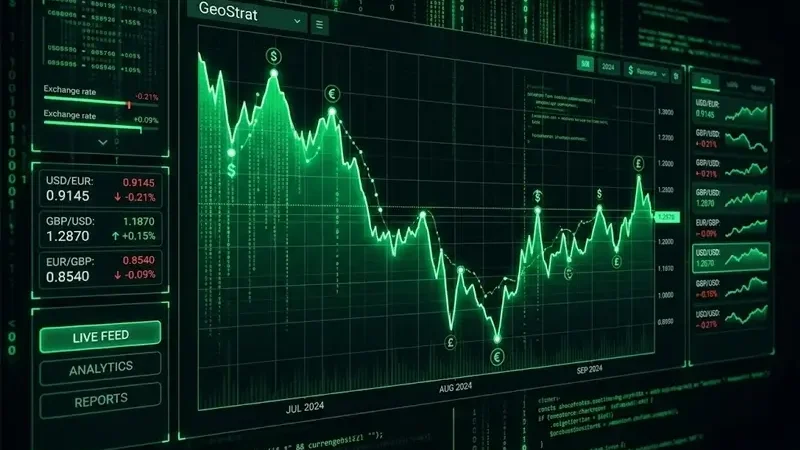
GeoStrat is a geopolitical intelligence platform designed to help users track global developments, analyze emerging risks, and monitor events that may affect markets and decision-making processes. By combining real-time monitoring with structured geopolitical insights, GeoStrat helps analysts and organizations better understand the external factors that can influence currency volatility.
To access live geopolitical monitoring and explore global risk signals, you can enter the GeoStrat console through the Launch Console option:
Common Mistakes When Hedging Currency Risk
Although currency hedging can reduce exposure to exchange rate fluctuations, poor planning or incorrect assumptions can make risk management less effective. Businesses and investors need to evaluate their actual currency exposure, market conditions, and geopolitical environment before selecting a hedging strategy. A successful approach requires continuous review rather than relying on a fixed solution.
Common mistakes when hedging currency risk include:
Ignoring political and geopolitical factors: Focusing only on currency movements while overlooking events that may influence exchange rates.
Using inappropriate hedging levels: Applying too much protection can create unnecessary costs, while insufficient hedging may leave significant exposure unmanaged.
Depending on a single hedging method: Combining different strategies can provide more flexibility in changing market conditions.
Failing to update risk assessments: Political developments and economic conditions can change quickly, requiring regular adjustments to risk management plans.

LearnMore: which platform monitors geospatial threats?
Conclusion
Political instability can create significant challenges for businesses and investors by increasing currency volatility and making financial planning more uncertain. Effective currency risk management requires a combination of financial instruments, diversification strategies, and continuous monitoring of global developments. By understanding the relationship between geopolitical events and currency markets, organizations can build more resilient strategies and better prepare for potential market disruptions.



FILE A TRANSMISSION