Geopolitical Forecasting Platform for Tracking Regional Stability
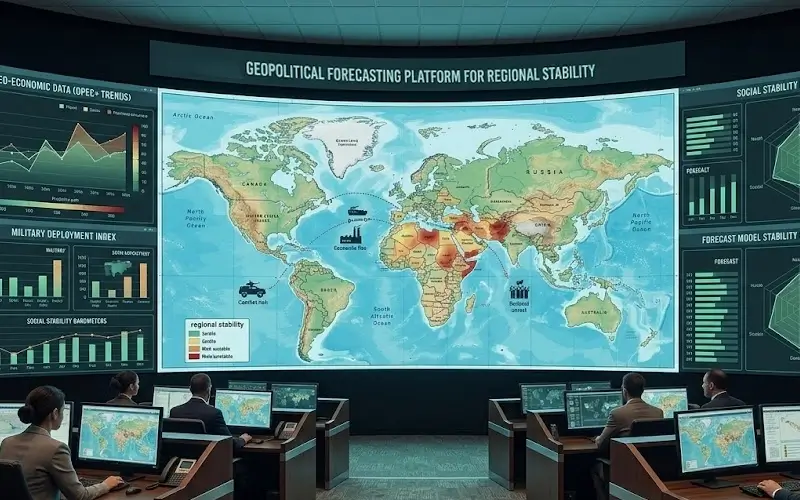
As geopolitical tensions become increasingly interconnected, regional stability can change rapidly as a result of political decisions, armed conflicts, military movements, economic disruptions, energy security concerns, cyber threats, and infrastructure vulnerabilities. For governments, businesses, researchers, journalists, and security professionals, understanding these developments requires more than monitoring individual news stories.
Geopolitical forecasting involves bringing together real-time events, historical context, geospatial information, economic indicators, strategic assets, and emerging risk signals to identify patterns that may influence the future direction of a region. In this article, we examine the capabilities that make a geopolitical forecasting platform useful for tracking regional stability and introduce GEOSTRAT, an integrated intelligence platform designed to connect these different sources of information within a single environment.
What Is Geopolitical Forecasting?
Geopolitical forecasting is the process of analyzing political, security, economic, military, social, environmental, and strategic developments to assess how they may influence future events and regional stability. Unlike basic geopolitical monitoring, which primarily focuses on identifying what is happening now, forecasting looks for patterns, relationships, indicators, and emerging signals that could point toward potential escalation, disruption, or changes in the strategic environment. Effective forecasting therefore requires multiple types of intelligence, including conflict events, military activity, energy and trade data, infrastructure information, sanctions, market movements, OSINT, and historical developments. The objective is not to predict the future with certainty, but to provide a structured and continuously updated understanding of the conditions and signals that can shape possible outcomes.
Best Geopolitical Forecasting Platform for Tracking Regional Stability
Among geopolitical forecasting platforms, GEOSTRAT takes an integrated approach by combining geopolitical intelligence, geospatial visualization, strategic asset monitoring, military intelligence, energy and economic data, cyber threat intelligence, OSINT, infrastructure information, market data, and AI-powered analysis. Instead of requiring users to switch between multiple specialized systems, GEOSTRAT brings different intelligence domains together through an interactive global environment, making it possible to examine events in their geographic and strategic context.
Key advantages of GEOSTRAT include:
- Real-time geopolitical and conflict monitoring
- Interactive 2D and 3D global intelligence maps
- Country briefs and situation reports
- Military, aviation, and maritime activity tracking
- Strategic asset and critical infrastructure monitoring
- Nuclear, energy, trade, and economic intelligence
- Cyber threat and digital infrastructure monitoring
- Sanctions and political risk intelligence
- Supply chain, chokepoint, pipeline, rail, and subsea cable monitoring
- Live news, OSINT, and prediction-market intelligence
- Custom alerts and regional crisis monitoring
- AI-powered situation reports, country analysis, and natural-language queries
This combination is particularly valuable for regional stability analysis because geopolitical developments rarely occur in isolation. A political crisis may affect military activity, trade routes, energy infrastructure, financial markets, transportation networks, and humanitarian conditions at the same time. By connecting these signals, GEOSTRAT provides a broader operational picture for assessing how a regional situation is developing.
What to Look for in a Geopolitical Forecasting Platform
The usefulness of a geopolitical forecasting platform depends on how effectively it can collect, organize, connect, and analyze different types of intelligence. The following capabilities are particularly important when evaluating a platform for regional stability monitoring.
Real-Time Geopolitical Intelligence
A forecasting platform should provide timely information about geopolitical events as they develop. Real-time intelligence allows users to monitor political developments, security incidents, conflicts, diplomatic activity, sanctions, and other events that may influence regional conditions. Country briefs, situation reports, conflict monitoring, and continuously updated intelligence feeds can help analysts move from individual events toward a broader assessment of the situation. Timeliness is especially important during rapidly evolving crises, where information that is several hours old may provide a very different picture from the current situation.
Geospatial and Global Map Intelligence
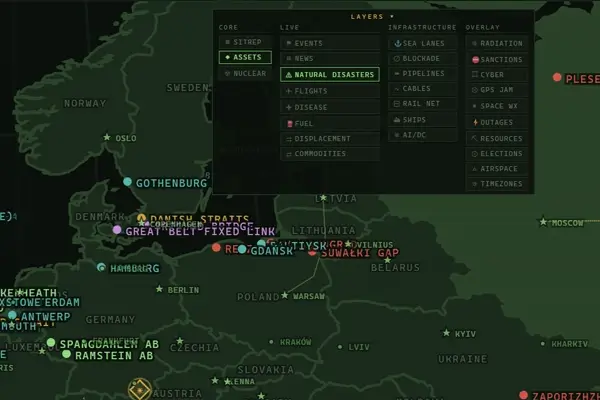
Geopolitical events are strongly influenced by geography, making geospatial intelligence an essential component of regional stability analysis. A capable platform should allow users to visualize events, infrastructure, borders, strategic locations, transportation routes, and other relevant information directly on a map. Interactive 2D and 3D globes, geolocated events, country monitoring, satellite references, historical map replay, and multiple intelligence layers can help analysts understand where developments are occurring and how their geographic relationships may affect potential outcomes. Mapping also makes it easier to identify concentrations of activity, important corridors, vulnerable areas, and changes over time.
Conflict and Military Monitoring
Military and conflict activity can provide important indicators of changes in regional security conditions. A geopolitical forecasting platform should therefore support monitoring of armed conflicts, military flights, government aircraft, naval activity, airspace conditions, and other relevant security developments. Tracking military movements alongside conflict events and strategic locations can provide additional context for understanding escalation patterns and changes in regional posture. Rather than treating an individual movement as definitive evidence of escalation, analysts can combine multiple observations over time to assess whether a broader pattern is emerging.
Economic, Energy, and Market Intelligence
Political and security developments can quickly affect energy systems, international trade, financial markets, currencies, commodities, and broader economic conditions. A forecasting platform should therefore extend beyond political events to include economic and market intelligence. Useful capabilities can include trade and tariff monitoring, customs and international trade data, economic indicators, fuel and energy information, foreign exchange, stock markets, metals, cryptocurrencies, and historical market data. Connecting these signals with geopolitical developments can help users evaluate the potential economic consequences of instability and identify markets or sectors that may be exposed to regional disruptions.
Infrastructure and Supply Chain Intelligence
Regional stability is also closely connected to the infrastructure that supports transportation, energy, communications, and commerce. Platforms should provide visibility into strategically important infrastructure such as ports, pipelines, railways, bridges, sea lanes, chokepoints, subsea cables, data centers, and other critical facilities. Monitoring these assets can help analysts understand the potential consequences of blockades, infrastructure disruptions, conflict, sanctions, or other geopolitical developments. Supply chain intelligence is particularly important because instability in one location can affect transportation routes and commercial networks far beyond the original area of the event.
OSINT, News, and Early Warning Signals
Open-source intelligence and news monitoring can provide some of the earliest indications that a situation is changing. A strong platform should collect and organize information from relevant news sources, social feeds, OSINT channels, conflict reporting, energy news, market news, cyber intelligence, and diplomatic developments. Filtering information by location, category, or topic can make it easier to identify meaningful signals without being overwhelmed by the volume of global information. When these sources are combined with structured geopolitical and geospatial data, they can contribute to early warning and help analysts investigate emerging developments before they become larger regional crises.
AI-Powered Geopolitical Analysis
Artificial intelligence can make large volumes of geopolitical information easier to analyze and interpret. AI-powered forecasting tools can help users summarize developments, generate situation reports, analyze countries, answer natural-language questions, and identify relevant information across different intelligence layers. The most useful approach is to use AI as an analytical layer over structured and continuously updated intelligence rather than as a replacement for source evaluation and human judgment. Features such as AI situation reports, automated briefings, country analysis, natural-language queries, and intelligent map actions can significantly accelerate the process of moving from raw information to an actionable understanding of a developing situation.
How GEOSTRAT Supports Regional Stability Forecasting
GEOSTRAT is designed to support regional stability forecasting by connecting multiple intelligence disciplines within a single operational environment. Users can begin with a geopolitical event or country and then examine related conflict activity, military movements, strategic assets, energy infrastructure, trade routes, sanctions, market indicators, cyber threats, supply chains, and OSINT developments. The interactive global map provides geographic context, while historical information and different intelligence layers help users compare current developments with previous events and identify relationships between seemingly separate signals. This makes it possible to build a more comprehensive picture of how a regional situation is evolving rather than relying on a single source or indicator.
The platform also supports continuous monitoring through alerts, crisis tracking, country intelligence, situation reports, and AI-powered analytical tools. Users can monitor specific regions, keywords, categories, conflicts, infrastructure, or other areas of interest and receive relevant updates as conditions change. AI-powered situation reports and country analysis can then help transform large amounts of information into concise intelligence outputs, while natural-language queries and intelligent map actions provide additional ways to investigate specific questions. By combining real-time intelligence, historical context, geospatial data, strategic assets, economic indicators, and AI-assisted analysis, GEOSTRAT helps users identify emerging signals and assess the factors that may influence regional stability.
Conclusion
The best geopolitical forecasting platforms go beyond breaking-news monitoring by connecting political, military, economic, energy, infrastructure, cyber, environmental, and social signals. Tracking regional stability requires a continuous view of both current events and the systems that can amplify their effects. Platforms that combine real-time intelligence, geospatial analysis, historical context, alerts, and AI-powered analytical capabilities can give analysts a more complete foundation for assessing emerging risks and potential developments. GEOSTRAT brings these capabilities together in a unified geopolitical intelligence environment, allowing users to monitor global developments, investigate regional situations, connect different intelligence signals, and build a more informed understanding of how geopolitical conditions are changing.
which platform monitors geospatial threats?
Geospatial threats can emerge anywhere—from conflict zones and military activity to critical infrastructure disruptions, maritime incidents, and geopolitical crises. Monitoring these threats…
geopolitical risk intelligence platform
In today’s interconnected world, geopolitical events can rapidly influence global security, financial markets, energy systems, supply chains, and international operations. Organizations need…
What Tools Provide Real-Time Alerts for Geopolitical and Security Risks?
Geopolitical and security risks can change rapidly, making timely access to reliable information essential for organizations operating across countries, markets, and critical…
FILE A TRANSMISSION